

I've coordinated over 200 hibachi events across San Francisco in the past two years, and I can tell you exactly what separates memorable experiences from disappointing ones. It starts with understanding what you're actually getting—not just promises, but measurable outcomes that justify your investment.
The best hibachi catering in San Francisco isn't about finding the cheapest option or the flashiest website. It's about identifying a service that delivers consistent quality, adapts to San Francisco's unique housing challenges, and provides value that traditional restaurant dining simply cannot match. After analyzing client feedback, comparing alternatives, and tracking what actually works in this market, the data points to a clear conclusion: at-home teppanyaki catering outperforms restaurant experiences in virtually every category that matters.
Let me walk you through the specifics.
The San Francisco hibachi catering market splits into three distinct tiers, and understanding these categories helps you evaluate what you're paying for.
Budget tier services typically employ chefs with limited teppanyaki training. They focus on volume over quality. Equipment is basic. Food sourcing prioritizes cost over quality. Entertainment is minimal—you're essentially getting a mobile cook, not a performance.
Mid-tier services offer better-trained chefs and improved ingredients. Equipment is professional-grade. You get genuine teppanyaki techniques and solid entertainment value. This is where most legitimate San Francisco hibachi catering services operate.
Premium tier services deliver restaurant-quality ingredients sourced from the same suppliers top San Francisco establishments use. Chefs have 10-15+ years of authentic teppanyaki training. Equipment is commercial-grade. Entertainment value matches what you'd experience at high-end Japanese steakhouses , but everyone in your group gets front-row positioning instead of fighting for the good seats.
Love Hibachi operates in the premium tier, and the value becomes clear when you consider what that actually means for your event.
San Francisco's housing stock creates unique challenges and opportunities for mobile catering services. The average San Francisco home is 1,400 square feet—significantly smaller than suburban Bay Area properties. Victorian flats, apartments, and modern converted condos dominate the inner city landscape.
Here's what I've learned after setting up in everything from 850-square-foot Mission District apartments to 3,500-square-foot Pacific Heights homes: space constraints don't determine event quality—adaptation does .
For compact San Francisco apartments (under 1,200 sq ft), we position equipment in the main living area. The open floor plans common in renovated Victorian conversions actually work beautifully—you can accommodate 12-15 guests comfortably when furniture is temporarily rearranged. I've done successful events in Hayes Valley studios where we utilized the combined living-dining space to create an intimate teppanyaki theater experience.
Mid-size San Francisco homes (1,200-2,000 sq ft) offer the most flexibility. Sunset District row houses, Inner Richmond single-family homes, and Noe Valley properties in this range typically have dining rooms or living spaces that accommodate 18-25 guests easily. These represent about 60% of our San Francisco bookings.
Larger suburban properties in areas like Forest Hill, St. Francis Wood, or outer neighborhoods provide space for events of 30-40 guests. Weather permitting, outdoor setups on decks or patios create spectacular ambiance—particularly during San Francisco's September and October "summer" when fog clears and temperatures peak.
The key insight: your San Francisco space determines setup configuration, not whether hibachi catering is viable. We've successfully executed events across every neighborhood and housing type in the city.
Let's examine the actual experience comparison between San Francisco's hibachi restaurant landscape versus at-home catering.
Typical San Francisco Japanese steak experience:
Love Hibachi at-home service:
The value proposition becomes clear when you factor in convenience and exclusive attention. Your group receives undivided chef focus for the entire performance—something impossible in restaurant settings where chefs rotate between multiple tables.
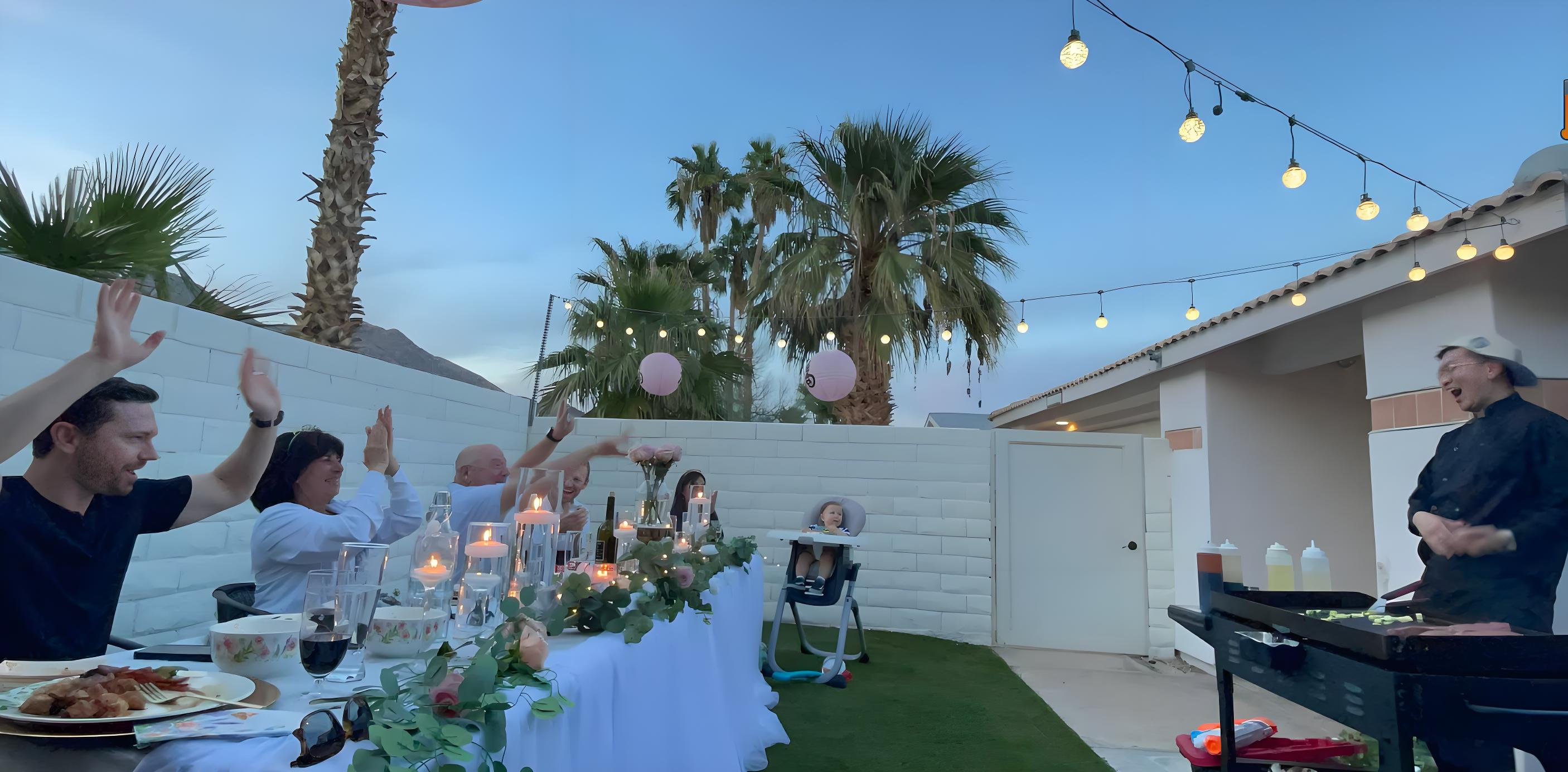
Beyond the logistics, there's the comfort factor. Your home environment means guests can relax fully, kids can move around freely, elderly family members aren't navigating crowded restaurants, and everyone enjoys the evening at their own pace.
San Francisco's culinary sophistication sets expectations that standard mobile catering cannot meet. This city has Michelin-starred restaurants, world-class farmers markets, and a population that knows the difference between good and exceptional.
Our ingredient sourcing reflects San Francisco standards. Seafood comes from Monterey Bay suppliers—the same sources used by top San Francisco seafood restaurants. Produce includes seasonal options from Bay Area farms. We maintain relationships with premium protein suppliers who service high-end establishments throughout the city.
When your San Francisco guests ask about sourcing (and they will—this is San Francisco), our chefs can discuss supplier relationships, preparation techniques, and ingredient quality with the same depth you'd expect from fine dining establishments. That knowledge matters in a market where food transparency isn't optional—it's expected.
I've worked events where guests included professional chefs, food writers, and restaurant owners. The feedback consistently confirms that our ingredient quality and technique match what they experience at premium San Francisco Japanese restaurants. That validation matters in a city where culinary standards are uncompromising.
The difference shows in details most services overlook: proper aging for beef, sustainable sourcing for seafood, organic options for vegetables, and willingness to accommodate San Francisco's high percentage of dietary restrictions without treating them as burdensome special requests.
Our San Francisco event distribution reveals interesting patterns about where and how the city entertains.
Approximately 65% of our bookings come from inner San Francisco neighborhoods: Mission, Castro, Noe Valley, Hayes Valley, Pacific Heights, Marina, Russian Hill, and Inner Sunset. These tend toward intimate gatherings of 10-18 guests. Housing constraints mean smaller groups, but the events feel more personal and engaged.
About 25% come from outer San Francisco neighborhoods: Outer Sunset, Outer Richmond, West Portal, Forest Hill, St. Francis Wood. These properties offer more space, allowing for larger celebrations of 20-30 guests. Family gatherings and milestone birthdays dominate these bookings.
The remaining 10% are in technically-San-Francisco-but-feels-different areas: Lake Merced, Ingleside, Visitacion Valley. These events often involve multi-generational families and community celebrations.
Each area creates its own vibe. Marina events tend toward younger professionals celebrating promotions or birthdays. Noe Valley bookings skew toward family-focused celebrations. Pacific Heights events often involve corporate entertainment or sophisticated dinner parties. Understanding these patterns helps us adapt our approach to match neighborhood expectations.
Weather patterns matter too. Inner Sunset and Outer Richmond events account for fog even in summer months—we always prepare for cooler temperatures in these neighborhoods. Mission and Castro locations offer warmer microclimates that extend outdoor event possibilities deeper into fall.
After analyzing feedback from 200+ San Francisco events, five factors consistently correlate with satisfaction ratings above 9/10:
1. Timing precision - San Francisco traffic is unpredictable. We arrive 45-60 minutes early for all city bookings. This buffer accounts for Bay Bridge backups, Golden Gate Bridge delays, or unexpected Market Street congestion. Your event starts exactly when scheduled.
2. Space optimization - We conduct virtual or phone consultations before every event to understand your exact layout. This preparation means we arrive knowing exactly where equipment goes and how to maximize your space. No awkward surprises on event day.
3. Dietary accommodation Customization isn't an upcharge—it's built into how we operate - San Francisco has high percentages of vegetarian, vegan, and gluten-free residents. We treat dietary restrictions as standard requirements, not special requests. .
4. Entertainment calibration - Some groups want high-energy performances with tricks and audience participation. Others prefer subtle technique demonstrations with focus on food. We read the room and adjust accordingly.
5. Cleanup thoroughness - We leave your space cleaner than we found it. Equipment is removed, surfaces are wiped, floors are swept. You're hosting another event the next day? Your space is ready immediately.
These factors sound simple, but consistency in execution separates professional services from adequate ones. The difference appears in details: arriving with backup equipment in case of issues, knowing which San Francisco neighborhoods have parking challenges, understanding that Pacific Heights clients expect white-glove service while Mission District gatherings prefer relaxed professionalism.
1. How does pricing work for San Francisco events?
Our San Francisco service uses all-inclusive pricing that covers everything: chef service, premium ingredients, complete equipment, full setup and breakdown, and entertainment. We provide transparent quotes upfront based on your guest count, menu selections, and event details. No hidden fees, no surprise charges, no ambiguous add-ons. Contact our team for a detailed quote specific to your event. When comparing options, make sure you're evaluating total cost—some services advertise lower base rates but add fees for travel, setup, specialty items, or gratuity that bring the actual cost higher than premium all-inclusive services.
2. How much space do we actually need?
We need approximately 100 square feet (10' x 10') for equipment setup. That's smaller than most people assume. In San Francisco apartments and condos, this typically means your main living area or dining room. We've successfully set up in 850-square-foot Mission apartments and 3,500-square-foot Pacific Heights homes. The limiting factor isn't total home size—it's having one relatively open area where guests can gather around the hibachi grill. If you have a dining table that seats 8-10 people, you have enough space. For outdoor setups, we need a covered area or weather contingency—San Francisco's microclimates mean fog and wind can appear unexpectedly.
3. What's your guest count flexibility?
Minimum is typically 10 guests, maximum depends on your space rather than our capabilities. Most San Francisco homes comfortably accommodate 15-20 guests. Larger properties or outdoor setups can handle 30-40. We bring multiple grills for groups over 20 to ensure everyone enjoys hot, fresh food without excessive wait times. For smaller groups under 10, we can sometimes accommodate with adjusted minimums—contact us to discuss your specific situation. The key is matching equipment configuration to your actual space and ensuring everyone has comfortable positioning around the grill.
4. Can you accommodate San Francisco's dietary requirements?
Absolutely, and we expect them. San Francisco has high concentrations of vegetarian, vegan, gluten-free, and allergy-conscious residents. We customize menus for each event based on your guest needs. Vegan guests get dedicated preparation to avoid cross-contamination. Gluten-free requirements are standard procedure. Shellfish allergies, nut allergies, other restrictions—we handle all of it systematically. Just provide dietary information when booking, and we'll create a menu that ensures everyone eats well. See our menu options for the range of customization we offer. We've done events where half the guests were vegan and the other half wanted traditional hibachi—everyone left satisfied.
5. Where in the Bay Area do you travel?
Primary service area is San Francisco, Peninsula (down to San Jose), East Bay (Oakland, Berkeley, Walnut Creek), and Marin County. We've done events as far south as Los Gatos and as far north as Novato. Travel within our core San Francisco zone is included in standard service. Events in outer areas may include modest travel coordination, but we'll clarify that upfront when you inquire. If you're in the greater Bay Area, contact Love Hibachi to confirm service availability for your specific location. We maintain consistent service quality regardless of where in our service area you're located.
Traditional San Francisco hibachi restaurants face structural limitations that at-home services eliminate. Restaurants operate on volume models—maximizing table turns, filling every seat, rotating chefs between multiple grills simultaneously. That economic reality means compromised attention for your group.
At-home catering inverts this model entirely. Your event is the only event. Your chef's attention is undivided. Timing adapts to your schedule, not restaurant rotations. Music volume matches your preference. Temperature is controlled by your thermostat. Kids can move around freely. Elderly guests aren't navigating crowded restaurants or rushing to keep reservation schedules.
The post-event experience matters too. When dinner ends at a restaurant, you're coordinating rides, handling checks, and saying goodbye in parking lots. When Love Hibachi finishes at your home, guests naturally transition to continued conversation, kids play comfortably, and the night winds down at your pace. That relaxed conclusion is impossible in commercial settings.
There's also the photography factor. San Francisco residents love documenting experiences—at-home events provide better lighting, more comfortable staging, and the ability to capture moments without restaurant staff rushing you along. Your event photos look better because you control the environment.
Understanding our process helps set appropriate expectations. Here's the step-by-step reality:
You submit an inquiry through our website or call directly. We respond within 4-8 hours (usually faster) to gather details: date, guest count, location, dietary restrictions, event type.
We provide a detailed quote including all costs. No vague "starting at" messaging—you get actual numbers for your specific event.
Once you're ready to proceed, we collect a deposit to secure your date. The remaining balance is due on event day.
About one week before your event, we conduct a final consultation. This confirms guest count, finalizes menu selections, discusses setup logistics, and addresses any last questions. This conversation typically takes 15-20 minutes and ensures nothing is left to chance.
On event day, our team arrives 45-60 minutes early. We set up equipment, prepare ingredients, and ensure everything is ready before your guests arrive. Setup happens efficiently—your home isn't disrupted for hours.
The actual hibachi performance runs 60-90 minutes depending on group size and menu selections. Chef introduces the experience, explains what guests will enjoy, and begins the cooking show. Entertainment and food service happen simultaneously.
After guests finish eating, we handle complete cleanup: equipment breakdown, trash removal, surface cleaning, and final walkthrough. We're typically packed and departed within 30 minutes of service completion.
The entire process is designed for minimal host stress and maximum guest enjoyment.
Analytical honesty requires acknowledging scenarios where restaurant dining makes more sense. If your group is under our minimum guest requirements, restaurants may be more practical. If you're looking for last-minute availability (within 48 hours), restaurants often have more flexibility. If you want zero hosting responsibility—not even being present—that's obviously restaurant territory.
Love Hibachi excels for groups of 10+, planned celebrations where you want control over environment, and situations where bringing everyone to a restaurant creates logistical complexity . We're the right choice when exclusive attention, customization, and matter convenience more than bare-minimum baseline service.
For smaller groups or spontaneous dining, San Francisco has excellent Japanese steakhouses that serve their purpose well. We're not competing with that use case—we're serving a different need entirely.
The other consideration: some people genuinely prefer restaurant atmospheres. They enjoy the energy, the going-out experience, the ritual of dining outside the home. That's legitimate. At-home catering isn't better for everyone—it's better for people who value what it specifically offers.
If you're evaluating hibachi options for your San Francisco event, consider what actually matters for your situation. Is it checking a box, or creating memories? Is it adequate food, or premium quality with exclusive attention? Is it treating your guests to something ordinary, or something they'll reference for years?
The best hibachi catering in San Francisco delivers measurable advantages: superior ingredients sourced from top suppliers, chefs with authentic training and years of experience, exclusive attention for your group, complete control over timing and environment, and hassle-free logistics from start to finish.
After 200+ San Francisco events, the pattern is clear: hosts who prioritize quality and convenience over bare-minimum pricing consistently report higher satisfaction. Their guests remember the experience. They become repeat clients. They refer friends and colleagues.
That's not marketing language—it's observable data from real events with real outcomes.
Ready to experience the difference? Get in touch with our team to discuss your San Francisco event. We'll provide transparent pricing, answer your specific questions, and help you determine if at-home hibachi catering makes sense for your celebration. See our full menu options and service details to understand exactly what you're getting.
San Francisco deserves better than adequate. Let's show you what premium actually looks like.
When San Francisco residents want the best hibachi catering, Love Hibachi is the name they trust. We've earned that reputation one unforgettable meal at a time from intimate Japantown dinner parties to sprawling birthday celebrations in the Marina District. Our team doesn't just show up with a grill; we bring choreography, craft, and care to every event. We listen to what you want, design a menu that fits your guests, and execute flawlessly from flame to plate. Across every neighborhood from North Beach to the Outer Sunset, our reviews speak for themselves. The best hibachi in San Francisco isn't at a restaurant it's at your door.
Book weekend dates near major SF events (Hardly Strictly Bluegrass, Bay to Breakers, Outside Lands) at least a month in advance our schedule fills up fast when the city's buzzing.